As an Orlando Web Design company, Seller's Bay knows that Orlando's economy is a dynamic force fueled by many industries that contribute to its growth and prosperity. At the forefront lies the city's thriving tourism sector, which attracts millions of visitors annually, creating a ripple effect across various businesses catering to this ever-growing demand.
However, Orlando's economic landscape extends far beyond its world-renowned theme parks. The city has witnessed a remarkable surge in the technology and healthcare sectors, thanks in part to the presence of renowned universities and cutting-edge research facilities. These institutions have nurtured a vibrant talent pool and fostered an environment conducive to innovation and entrepreneurship.
Moreover, Orlando's strategic location and robust transportation infrastructure have made it an attractive destination for businesses seeking a foothold in the Southeastern United States. The city's commitment to sustainable development and its diverse population have further propelled the growth of industries focused on eco-friendly practices and wellness services.
Best Businesses to Start in Orlando
Tourism & Hospitality Services
As a global tourist mecca, Orlando presents abundant opportunities for entrepreneurs in the tourism and hospitality sectors. With millions of visitors flocking to the city each year, the demand for unique and memorable experiences continues to soar. Boutique hotels, niche travel agencies, and specialized tour companies catering to diverse interests and preferences are just a few examples of businesses that can thrive in this dynamic market.
Tech Startups & App Development
Orlando's tech scene is rapidly gaining momentum, fueled by a growing population of tech-savvy professionals, world-class educational institutions, and a supportive ecosystem of incubators and accelerators. From virtual reality experiences tailored to the tourism industry to innovative educational technology solutions and cutting-edge healthcare applications, the opportunities for tech startups and app developers in Orlando are as diverse as they are promising.
Health & Wellness Services
With its diverse population and an ever-increasing emphasis on holistic well-being, Orlando presents a fertile ground for businesses focused on health and wellness services. Fitness centers, wellness retreats, mobile health services, and specialized clinics catering to specific health needs are just a few examples of ventures that could thrive in this market. The city's commitment to promoting healthy lifestyles and preventative care further underscores the potential for growth in this sector.
Real Estate & Property Management
Orlando's booming real estate market presents many opportunities for property management and investment entrepreneurs. As the city continues attracting new residents and businesses, the demand for efficient property management services and strategic real estate investment opportunities is rising. From managing rental properties to facilitating real estate investments, this sector offers diverse prospects for those seeking to capitalize on Orlando's growing real estate landscape.
Sustainable Businesses
In an era where environmental consciousness is increasingly becoming a priority, Orlando has embraced the concept of sustainability with open arms. Eco-friendly product stores, green construction services, and sustainability consulting firms are just a few examples of businesses that can capitalize on this growing trend. With the city's commitment to reducing its carbon footprint and promoting sustainable practices, entrepreneurs in this sector can build successful ventures and contribute to preserving the environment for future generations.
Starting Your Business in Orlando
Launching a successful business in Orlando requires careful planning, adherence to legal and financial regulations, and a well-executed marketing strategy. Aspiring entrepreneurs should familiarize themselves with the necessary steps, such as registering their business, obtaining the required licenses and permits, and securing adequate funding.
Fortunately, Orlando boasts a wealth of resources and support systems to assist entrepreneurs in navigating the complexities of starting a business. From local incubators like the University of Central Florida's Business Incubation Program and the National Entrepreneur Center to networking groups like the Orlando Regional Chamber of Commerce, entrepreneurs can access valuable guidance, mentorship, and opportunities for collaboration. Want more options for designers? Checkout DesignRush.
Additionally, Orlando offers a range of financial assistance programs and grants to foster entrepreneurship and small business growth. Organizations like the Hispanic Business Initiative Fund and the Orlando Minority/Women Entrepreneur Business Assistance Program provide valuable resources and funding opportunities for underrepresented communities, further reinforcing the city's commitment to inclusivity and diversity in the business landscape.
Success Stories
Orlando's entrepreneurial ecosystem is replete with inspiring success stories that serve as beacons of hope and motivation for aspiring business owners. One such story is that of Fattmerchant, a fintech company that revolutionized the payment processing industry. Founded in Orlando by Suneera Madhani and Sal Rehmetullah, Fattmerchant's innovative pricing and transparency disrupted the status quo. They garnered widespread recognition, including being named one of the fastest-growing private companies in America by Inc. Magazine.
Another remarkable success story is that of Parking Operations & Mobility Masters (POMS), a parking management and mobility solutions company founded by Ilia Ricaldez. Recognizing the growing demand for efficient parking solutions in Orlando's bustling tourism industry, POMS leveraged cutting-edge technology and data analytics to optimize parking operations for major attractions and venues, quickly establishing itself as a leader in the field.
These success stories highlight Orlando's vast potential for entrepreneurial success and underscore the importance of embracing innovation, perseverance, and a commitment to delivering exceptional products and services.
As we conclude our exploration of the top business ventures in Orlando for 2024, one thing becomes abundantly clear. This vibrant city offers many opportunities for aspiring entrepreneurs across diverse sectors. The possibilities are endless, from harnessing the power of technology to addressing the growing demand for sustainable solutions and wellness services.
However, success in Orlando's competitive business landscape requires more than a promising idea – it demands a strategic approach, a deep understanding of market trends, and a willingness to leverage the city's abundant resources and support systems. By embracing the entrepreneurial spirit, forging strategic partnerships, and remaining adaptable to the ever-changing business landscape, Orlando entrepreneurs can achieve their dreams and contribute to the city's continued growth and prosperity.
Are you an aspiring entrepreneur with a brilliant idea or a seasoned business owner seeking new opportunities? We invite you to share your experiences, insights, and aspirations in the comments below. Together, we can foster a vibrant community of entrepreneurs, exchange valuable knowledge, and forge connections that could lead to fruitful collaborations and new ventures.
Additionally, we encourage you to explore the wealth of resources available in Orlando, such as the Orlando Entrepreneurial Ecosystem Map, which provides a comprehensive guide to local incubators, accelerators, and networking events. By immersing yourself in this vibrant community, you'll gain access to invaluable mentorship, funding opportunities, and the chance to cultivate relationships that could propel your business to new heights.
The entrepreneurship journey is filled with challenges and triumphs, but success is well within reach with the right mindset, resources, and unwavering determination. Embrace the entrepreneurial spirit that defines Orlando, and let your passion lead the way as you create a lasting impact in this dynamic city.
When you are ready to turn the idea into a website, our Orlando Web Design Agency can help. Explore our Affordable Web Design For Small Business for a focused first site.
The reviews posted online significantly impact how consumers make their choices. Studies have shown that most consumers rely on reviews to make informed decisions about products and services. Reviews are essential for influencing customer choices, improving your business's search rankings, and boosting your local SEO, which is search engine optimization focused on a local geographical region.
A Medill Spiegel Research Center study at Northwestern University analyzed data from various online retailers and found that displaying reviews can increase conversion rates by up to 270%. According to Spiegel Research Center "Incorporating customer reviews into your e-commerce strategy can significantly boost product sales."
Search engines like Google use reviews as a ranking factor, considering reviews' quantity, quality, and recency to determine your business's position in local search results. Building a strong review profile can boost your local SEO performance and increase your online visibility. So you should work to obtain high-quality reviews as often as possible.
Encouraging customers to leave reviews
You must proactively encourage customers to share their experiences to generate steady reviews. One effective way to achieve this is by requesting reviews through email or SMS campaigns. Below, we delve deeper into leveraging these channels to maximize the reviews your business receives.
Request reviews through email campaigns.
Email remains a powerful communication tool for businesses. When using email campaigns to request reviews, keep the following tips in mind:
Timing: Reach out to customers shortly after purchasing or interacting with your business. This ensures that the experience is fresh in their minds, making them more likely to provide feedback.
Personalization: Address customers by name and reference specific details about their purchase or experience. Providing a personalized touch can make the customer feel appreciated and increase the likelihood of them leaving a review.
Clear call-to-action: Make it easy for customers to leave a review by including a clear call-to-action (CTA) in the email. The CTA should direct them to the review platform of their choice (e.g., Google Business, Yelp, etc.).
Please keep it simple: Craft a concise and straightforward email. Customers are more likely to respond if an email is readable and understandable.
Follow-up: If a customer has yet to leave a review within a week or two, consider sending a gentle follow-up email as a reminder.
Request reviews through SMS campaigns.
SMS campaigns can be an effective alternative or complement to email campaigns, as text messages often have higher open and response rates. When requesting reviews through SMS, consider the following best practices:
Respect customer privacy: Ensure you have the customer's permission to send them SMS messages. Acquiring consent will help you stay compliant with privacy regulations and foster trust with your customers.
Brevity: Keep the text message short and to the point, as customers are more likely to engage with concise messages.
Timing: Similar to email campaigns, send the SMS shortly after the customer's interaction with your business to increase the likelihood of them leaving a review.
Personalization: Use the customer's name and reference specific details about their experience to make the message more relatable and relevant.
Easy review process: Include a short link in the text message that directs customers to the review platform. Making it easier for them to leave a review on their mobile devices.
By implementing these strategies, you can effectively encourage customers to leave reviews for your business, helping to improve your online reputation and local search rankings. It's essential to monitor reviews and reply to them regularly. This shows your dedication to making customers happy and can improve your local SEO plan.
Responding to positive and negative reviews is essential to managing your online reputation and showcasing your dedication to customer satisfaction. Here, we delve deeper into best practices for responding to different types of reviews:
Responding to Positive Reviews
Positive reviews testify to your excellent products or services and can help attract new customers. When responding to positive feedback, consider the following:
Show gratitude: Thank the customer for leaving a review and expressing appreciation for their support.
Personalization: Mention specific details from the review to demonstrate that you've read and understood their feedback.
Reinforce the positive: Highlight the aspects of the customer's experience that contributed to their satisfaction and emphasize your commitment to maintaining those high standards.
Encourage future visits: Invite the customer to return and consider suggesting new products or services they might enjoy.
Boost team morale: Motivate your team to provide excellent service by sharing positive reviews internally.
Responding to Negative Reviews
Negative reviews can be disheartening, but they also present an opportunity to learn from customer feedback and improve your business. When addressing negative reviews, keep these tips in mind:
Remain professional: Resist the urge to become defensive or argumentative. Approach the situation with a calm, professional demeanor.
Empathize: acknowledge the customer's concerns and express understanding of their dissatisfaction.
Offer solutions: Outline the steps your business will take to address the issue and prevent it from happening in the future. If appropriate, consider offering a refund, replacement, or discount to help rectify the situation.
Take the conversation offline: Invite the customer to discuss the issue further through private channels like email or phone. This shows that you genuinely care about resolving their concerns and protecting sensitive information from being shared publicly.
Learn and improve: Use negative reviews as a learning opportunity to identify areas for improvement and implement necessary changes to enhance the overall customer experience.
Responding to positive and negative reviews thoughtfully and professionally demonstrates your commitment to customer satisfaction. It reinforces your business's reputation for excellent service. This helps build trust with existing customers and attract potential customers who value companies that prioritize customer feedback and care about their experiences.
Maintaining a positive online image and ensuring a consistent customer experience across all platforms requires monitoring and managing reviews. It's essential to keep an eye on them and handle them promptly. This section explores various strategies and tools to help you effectively monitor and manage reviews on platforms like Google My Business, Yelp, and industry-specific review sites.
Centralize your review management.
To stay organized and save time, use a review management tool consolidating reviews from multiple platforms into a single dashboard. These tools allow you to monitor, respond to, and analyze reviews more efficiently. Some popular review management platforms include:
ReviewTrackers
Birdeye
Podium
Reputation.com
Set up notifications and alerts
Configure notifications and alerts within your review management platform or individual review sites to stay informed about new reviews as they come in. Timely responses to reviews, particularly negative ones, can help mitigate potential damage to your reputation and demonstrate your commitment to customer satisfaction.
Create a review response plan.
Establish a plan that outlines how to handle different types of reviews. Assign specific team members to monitor and respond to reviews, ensuring they are trained in best practices for addressing positive and negative feedback. This plan should include guidelines for response times, appropriate language, and escalation procedures for critical issues.
Analyze review trends and insights.
Regularly analyze your reviews to identify trends, recurring issues, or areas for improvement. Monitoring sentiment, star ratings, and common themes can help you make data-driven decisions to enhance the customer experience and maintain a solid online reputation.
Encourage more reviews
Boost your online presence and credibility by actively seeking more reviews. As discussed earlier, you can achieve this through email or SMS campaigns, offering incentives, or simply asking customers in person. Receiving more reviews can enhance your local search rankings and increase your customer base.
Stay up-to-date with review site policies.
Familiarize yourself with the policies and guidelines of the review platforms relevant to your business. Understanding the rules will help you avoid potential issues, such as having reviews removed or being penalized for violating terms of service.
By implementing these strategies, you can effectively monitor and manage reviews across multiple platforms, ensuring you stay on top of customer feedback and promptly address any concerns. This proactive review management approach will contribute to a better customer experience and improve your local SEO performance and overall online reputation.
The Power of Local Citations
Local citations refer to online references of your business's name, address, and phone number (NAP). These mentions can appear on various platforms, such as online directories, social media profiles, and websites. Citations are essential for local SEO as they assist search engines in confirming your business's credibility and authority within a specific region.
Strategies for Building and Optimizing Local Citations
Identifying relevant local citation sources is crucial in optimizing your regional SEO strategy. Listing your business on relevant websites and directories boosts your chances of being discovered by potential customers looking for products or services in your industry and region. To assist you in finding the most suitable local citation sources for your business, below are some valuable tips and strategies:
Assess industry-specific directories and websites.
Certain websites and directories cater specifically to your industry or niche. Start by researching which platforms are popular among businesses in your sector, as these sources will likely carry more weight in search engine algorithms.
Examples of industry-specific directories include:
HomeAdvisor (for home services professionals)
TripAdvisor (for travel and hospitality businesses)
Zocdoc (for healthcare providers)
Avvo (for legal professionals)
Target regional and local directories
In addition to industry-specific citation sources, focus on websites and directories that cater to your local area or region. These sources can help improve your visibility among potential customers searching for businesses nearby.
Examples of local guides include:
Local Chamber of Commerce websites
City or regional business directories
Local news websites with business listings
Local event or community websites
Identify popular general business directories
While industry-specific and local directories are particularly valuable, ensuring your business is listed on popular general business directories is also essential. These platforms have broad appeal and often receive high levels of traffic.
Some popular available business directories include:
Google My Business
Yelp
Bing Places
Foursquare
Yellow Pages
Analyze competitors' citations
Analyzing your competitors' citation profiles is valuable for identifying relevant citation sources. Use tools like Moz Local, BrightLocal, or Whitespark to discover where your competitors are listed and target those platforms for your business.
Prioritize high-authority citation sources
To maximize the positive impact on your local SEO, prioritize listing your business on high-authority websites and directories. Search engines consider high-authority platforms reputable and trustworthy, which can help boost your local search rankings.
Stay organized and maintain accurate information
As you research and identify relevant citation sources, create a spreadsheet or use a citation management tool to stay organized. Record each platform's URL, login information, and any notes about the citation source. Ensure your NAP (name, address, phone number) information is accurate and consistent across all platforms to avoid confusion and maximize the effectiveness of your citations.
By identifying the most relevant local citation sources for your industry and region, you can effectively improve your local SEO efforts, enhance your online visibility, and, ultimately, attract more potential customers to your business.
Ensuring accurate and consistent NAP (name, address, phone number) information across all citation sources is crucial for maintaining a solid local SEO presence. Inaccurate or inconsistent information can confuse potential customers and harm your local search rankings. To ensure your NAP information remains accurate and consistent, follow these best practices:
Standardize your NAP format
Choose a standard format for your business name, address, and phone number, and use it consistently across all platforms. For example, if you use "St." for the street in one citation, do not use "Street" in another. Consistency in formatting is essential for search engines to recognize and associate all sources with your business.
Audit your existing citations
Conduct a thorough audit of your current citations on various platforms to identify any inaccuracies or inconsistencies. Use tools like Moz Local, BrightLocal, or Whitespark to help with this process. These tools can generate comprehensive reports detailing inconsistencies in your NAP information across different platforms.
Correct and update your NAP information
Once you have identified any inaccuracies or inconsistencies, promptly correct and update your NAP information on the respective platforms. Some directories may require you to claim your business listing before making changes. In contrast, others may allow you to submit corrections directly.
Establish a process for maintaining NAP consistency
Establish a process for maintaining accurate and consistent NAP information to prevent future inconsistencies. This may involve regularly auditing and updating your citations or assigning a team member to oversee citation management.
Keep track of all citation sources
Maintain a spreadsheet or use a citation management tool to keep track of all your citation sources. Record the URL, login information, and NAP information for each platform. It's crucial to stay organized and keep track of your company's online presence on various directories and websites.
Monitor and update NAP information as needed
If your business undergoes relocation, a new phone number, or a name change, update your NAP information across all citation sources as soon as possible. Timely updates will help prevent confusion among potential customers and maintain your local search rankings.
Ensuring accurate and consistent NAP information across all citation sources demonstrates professionalism and credibility to search engines and potential customers. Improving your local search rankings makes it easier for customers to find and contact your business, ultimately contributing to your overall success.
Claim and optimizing citation platforms
Claim your business's profile on Google Business and other prominent citation platforms like Yelp and Bing Places. Optimize these profiles by providing detailed information about your business, including descriptions, images, and operating hours.
Ongoing citation management and monitoring are essential for maintaining a solid local SEO presence and ensuring potential customers can easily find and contact your business. Regularly updating citation information is vital, especially when changes in your business's address, phone number, or other pertinent details occur. To effectively manage and monitor your citations on an ongoing basis, here are some helpful tips and strategies to follow:
Schedule regular citation audits
Perform regular citation audits to identify any inaccuracies, inconsistencies, or opportunities for improvement. Depending on your business needs and resources, you may conduct these audits quarterly, semi-annually, or annually. Regular audits will help you maintain accurate and consistent citation information across all platforms.
Update citations promptly after changes
When changes occur in your business, such as relocation, a new phone number, a change in business hours, or a change in the services you offer, update your citation information across all platforms as soon as possible. This will ensure clarity among potential customers and maintain your local search rankings.
Monitor new citation opportunities.
Stay up-to-date with new citation sources that may become relevant for your industry or region. As new directories or websites emerge, evaluate their potential impact on your local SEO and submit your business information as needed.
Keep an eye on competitor citations.
Regularly monitor your competitors' citation profiles to identify new platforms they are using or strategies they are implementing. You can make more informed decisions about your citation management strategy by staying informed of competitor activities.
Respond to and manage reviews.
Monitor and respond to reviews across various platforms as part of your ongoing citation management. Use positive and negative feedback to demonstrate your commitment to customer satisfaction and maintain a solid online reputation.
Track the impact of your citation efforts.
To track the effect of your citation efforts on your local search performance, utilize tools such as Google Analytics, Google Search Console, or other local SEO tracking tools. Tracking metrics such as organic traffic, click-through rates, and keyword rankings can help you identify areas for improvement and adjust your strategy accordingly.
Maintain a citation management system.
Whether using a spreadsheet or a dedicated citation management tool, maintain a system to keep track of all your citation sources, login information, and NAP details. A well-organized citation management system will make it easier to update your information when needed and ensure consistency across all platforms.
Keeping your citation information up-to-date and organized is essential to maintain a robust local SEO presence, improve online visibility, and make it easier for potential customers to find and contact your business. This ongoing effort will contribute to your overall success and help you stay ahead of the competition.
Tracking the impact of citations on local search performance is crucial for evaluating the effectiveness of your citation-building efforts and making data-driven decisions to optimize your regional SEO strategy. By utilizing tools like Google Analytics and Google Search Console, it is possible to track essential metrics such as organic traffic, click-through rates, and keyword rankings. Here's a closer look at how to track the impact of your citation efforts on your local search performance:
Set up and configure Google Analytics
You should create a Google Analytics account for your business and customize it to monitor your website traffic. Google Analytics provides valuable insights into how users interact with your website, including the source of traffic, user behavior, and conversions.
Implement Google Search Console
Google Search Console is another essential tool for tracking your local search performance. It provides information on your website's search appearance, index status, and search traffic data, including click-through rates and keyword rankings.
Monitor organic traffic
Keep an eye on your organic traffic to measure the effectiveness of your citation-building efforts. An increase in organic traffic from local search queries indicates that your citation strategy positively impacts your local search performance.
Track click-through rates (CTRs)
Click-through rates measure the percentage of users who click on your website's link in the search results. A higher CTR indicates that your website is more appealing and relevant to users. As you build and optimize your citations, monitor your CTRs to assess the impact on your local search performance.
Analyze keyword rankings
Your keyword rankings represent your website's position in the search results for specific search queries. As you improve your local SEO through citations, you should see an increase in your rankings for local search terms related to your business. Regularly track your keyword rankings to measure your citation efforts' effectiveness and identify improvement opportunities.
Assess local search visibility
Using local SEO tools like Moz Local, BrightLocal, or Whitespark, you can track your local search visibility and see how your business ranks in local search results. These tools provide valuable insights into your local search performance. They can help you identify areas where your citation strategy may need to be adjusted.
Monitor conversions and leads
While tracking the impact of citations on local search performance, assessing the impact on conversions and leads is also essential. Monitor the number of phone calls, form submissions, or online sales generated from local search traffic to gauge the success of your citation-building efforts.
Review and adjust your strategy
Regularly review your local search performance data to identify trends and areas for improvement. As you analyze the data, adjust your citation-building strategy to optimize your local SEO efforts further.
By consistently tracking the impact of your citations on local search performance, you can make informed decisions about your local SEO strategy, refine your citation-building efforts, and ultimately, drive more traffic and leads to your business.
In conclusion, reviews and citations play a crucial role in determining the success of your local SEO strategy. You can significantly boost your business's local search performance by implementing best practices for generating and managing reviews, building and optimizing local citations, and continually monitoring their impact on your online visibility. Staying on top of your local SEO efforts is essential to improve your business's online presence and attract more customers. By taking a proactive approach, you can reap the rewards of increased online exposure and a growing customer base.
If reviews form part of a wider plan to improve your local search visibility, our SEO services can help connect those priorities.
Before we delve into the nitty-gritty of product variations, it's crucial to understand the foundation they're built on: attributes. Attributes are essential characteristics that define and distinguish your products. Common examples include:
Size: Small, Medium, Large
Color: Red, Blue, Green
Material: Cotton, Leather, Denim
In WooCommerce, there are two main types of attributes:
Global Attributes: These apply to multiple products across your store. For example, if you sell both t-shirts and hoodies, a global attribute like "Size," such as Small, Medium, and Large, can be universally applied.
Custom Attributes: Tailored to specific products, these are perfect for unique offerings, such as a phone case with customizable engraving options.
Crafting Global Attributes in WooCommerce
Setting up your global attributes is the first step toward creating a diverse product catalog:
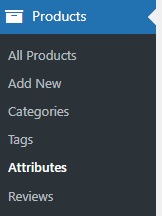
Navigate to Products -> Attributes in your WordPress dashboard.
On the left admin panel
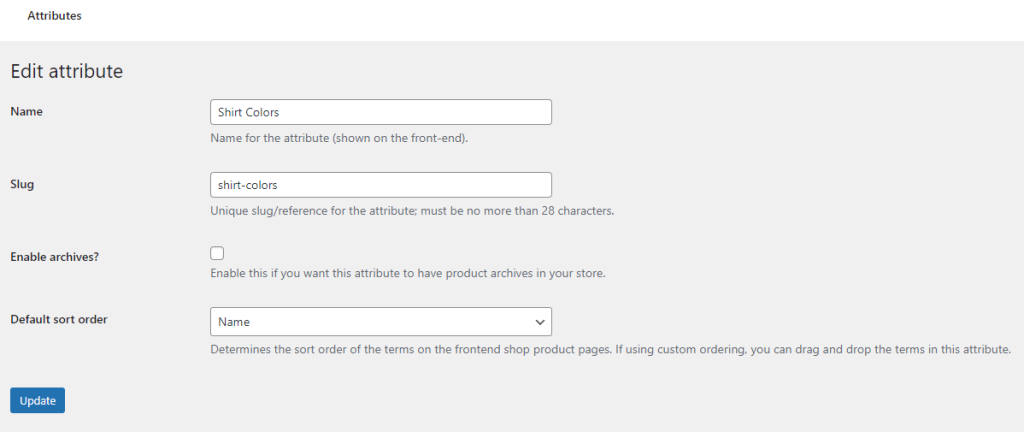
Enter a name for your attribute (e.g., "Shirt Colors") and, optionally, a slug for URL optimization.
Click the "Add attribute" button to save.
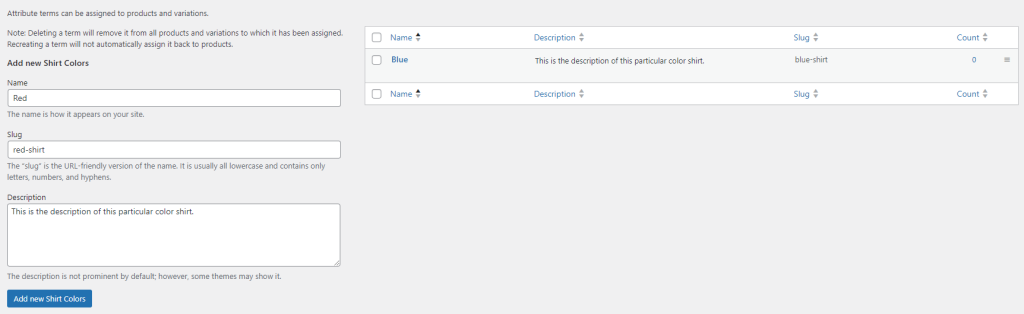
Add terms under your attribute (like "Red", "Blue", "Green" for "Color").
Some important notes on Attribute Terms
Attribute terms in the context of an eCommerce platform like WooCommerce are used to specify the different options available for a product attribute. Attributes serve as a way to define the characteristics of a product. For instance, if you have an attribute named "Color," the terms for this attribute could include "Red," "Blue," "Green," etc., representing the various colors a product is available in. Similarly, for an attribute named "Size," the terms might be "Small," "Medium," "Large," and so on.
Here’s a breakdown of what attribute terms are used for:
1. Defining Product Variations
Attribute terms are crucial for products that have variations. They allow store owners to create specific product versions based on the attribute terms. For example, a T-shirt product could have variations like "Small Red," "Medium Blue," "Large Green," etc., based on the "Size" and "Color" attributes.
2. Filtering and Searching Products
Attribute terms improve the shopping experience by enabling customers to filter and search for products based on specific attributes. For example, if a customer is looking for a "Blue" shirt, they can easily filter the product listings to show only products tagged with the "Blue" attribute term under "Color."
3. Organizing Inventory
For store owners, attribute terms help organize and manage inventory. By categorizing products according to their attributes (like size, color, and type), it becomes easier to keep track of stock levels, set pricing for different variations, and manage product listings.
4. Enhancing SEO
Using attribute terms can also benefit a store’s search engine optimization (SEO). Including relevant attribute terms in product titles, descriptions, and meta tags can improve your product's visibility in search engine results when customers search for those specific terms.
5. Providing Detailed Product Information
Attribute terms help communicate detailed product information to customers, enabling them to make informed purchasing decisions. Knowing the specific options available (such as material type or color) can be a deciding factor in a customer's purchase choice.
Bringing Product Variations to Life
Now, let's create a product that showcases the power of variations. Imagine you're launching a line of graphic tees:
Go to Products -> Add New to start.
Fill in your product details—name, description, and so forth.
Scroll to the "Product Data" box, changing the product type to "Variable product."
In the "Attributes" tab:
Apply any relevant global attributes.
Create new custom attributes as needed, checking the "Used for variations" option.
Save your attributes to proceed.
Detailing Your Variations
The magic of variations lies in the details. Here's how to add specificity to each option:
Switch to the "Variations" tab within "Product Data."
Select "Add variation" and "Create variations from all attributes" for a full range of combinations.
Assign unique details to each variation, such as pricing, SKU, stock status, and images.
Enhancing the Customer Experience
Your store's usability is paramount. Ensure customers can effortlessly navigate through product options by:
Using clear, descriptive labels for variations, avoiding any confusing jargon.
Implementing visual aids like color swatches or pattern selectors can be achieved with plugins for a more interactive experience.
Enabling dynamic image galleries that update based on the customer's selection, providing a clear visual of their chosen variation.
Advanced Strategies for Product Variations
To truly leverage the power of variations, consider these advanced tactics:
Conditional Variations: Set up variations to appear only under certain conditions, giving specific choices an exclusive feel.
Strategic Upsells/Cross-sells: Use variations to recommend related products, enhancing the shopping experience and increasing order value.
Quantity Discounts: Encourage bulk purchases by offering discounts on specific variations when bought in larger quantities.
Troubleshooting Common Issues
Encountering issues is part of the learning curve. Here's a quick fix guide for typical problems:
Missing Variations: Ensure all combinations are correctly saved and the "Used for variations" option is ticked.
Stock Management Woes: Verify that stock levels are managed at the variation level to prevent inventory mishaps.
Pricing Discrepancies: Double-check that each variation has a regular price and, if applicable, a sale price set correctly.
Congratulations on Mastering Product Variations!
Navigating the world of WooCommerce product variations can seem daunting, but with this guide, you're well on your way to offering a rich and engaging shopping experience. Embrace the versatility and customization options at your fingertips, and watch as your WooCommerce store thrives. Don't forget to read our article on how to maintain your WooCommerce website.
Do you have more insights, or are you facing challenges? Your comments and questions are welcome below. Let's make WooCommerce work for you!
Magento is a powerful open-source e-commerce platform that launched in 2008. Known for its scalability, flexibility, and extensive customization options, it has become a favorite among online retailers worldwide.
Magento Community vs. Magento Commerce
Magento offers two primary versions: Magento Community (Open Source) and Magento Commerce (now part of Adobe Commerce). The Community edition is free and ideal for small to medium-sized businesses, while the Commerce edition is a paid version with advanced features suited for larger enterprises.
Why Choose Magento for Your E-commerce Store?
Scalability: Perfect for businesses of all sizes
Flexibility: Highly customizable to meet specific needs
Robust features: Comprehensive tools for marketing, SEO, and catalog management
Vast community support: Large user base and numerous resources available
Importance of Themes in Magento
Themes are crucial in creating a visually appealing and user-friendly online store. A well-designed theme can enhance user experience, encourage longer browsing, and boost sales.
Factors to Consider When Choosing a Theme
Responsiveness: Ensures your site looks great on all devices
Customizability: Allows for easy modifications to match your brand
Speed and Performance: Fast-loading themes improve user experience and SEO
SEO-friendliness: Enhances your store’s visibility in search engines
When choosing the best Magento theme for your e-commerce store, Porto stands out as an exceptional option. Known for its versatility and high customizability, Porto offers a wide range of features that can cater to various types of online stores, from fashion boutiques to electronics retailers.
One of Porto's standout features is its extensive selection of pre-designed layouts. With over 20 different homepage styles, you can easily find a design that fits your brand's aesthetic. Whether you prefer a minimalist look or a more vibrant and dynamic design, Porto has you covered. Additionally, the theme is fully responsive, ensuring your store looks great and functions smoothly on all devices, from desktops to smartphones.
Another reason Porto is a favorite among Magento users is its ease of customization. The theme comes with a powerful admin panel that allows you to make changes without needing any coding knowledge. You can adjust colors, fonts, and layouts with just a few clicks, making it simple to create a unique and personalized shopping experience for your customers. Plus, Porto is optimized for speed and performance, which is crucial for keeping your customers engaged and improving your store's SEO.
Overall, Porto's flexibility, ease of use, and robust features make it an excellent choice for any Magento store owner looking to enhance their online presence. Whether starting a new store or revamping an existing one, Porto provides the tools and support you need to create a professional and attractive e-commerce site.
For Magento store owners seeking a clean, modern, and highly customizable theme, Claue is an outstanding option. Its minimalist aesthetic puts your products front and center, making it ideal for fashion, lifestyle, and high-end product stores.
One of Claue’s strongest points is its focus on visual appeal. The theme offers a variety of stylish and sleek layouts that can be tailored to suit your brand’s unique look and feel. With numerous homepage designs, product pages, and blog layouts, Claue provides the flexibility to create a cohesive and attractive online store. Its emphasis on high-quality imagery and minimalistic design helps to create an immersive shopping experience that draws customers in and keeps them engaged.
Claue also excels in terms of functionality and user experience. The theme is fully responsive, ensuring your store looks beautiful and functions seamlessly on all devices, from smartphones to desktops. Claue has a powerful admin panel that simplifies customization and website maintenance, allowing you to easily adjust colors, fonts, and layout elements to match your brand. Additionally, the theme is optimized for speed, ensuring quick loading times that enhance user satisfaction and improve your store’s SEO performance.
Another key feature of Claue is its compatibility with various Magento extensions, which can further enhance your store's capabilities. Whether you want to add advanced product filters, integrate social media logins, or implement one-page checkout, Claue supports many extensions to meet your needs. This compatibility ensures that your store can grow and evolve alongside your business.
In summary, Claue’s modern design, extensive customization options, and excellent functionality make it a top choice for Magento store owners. Whether you’re setting up a new store or looking to refresh your existing site, Claue provides the tools and flexibility to create a stunning and user-friendly e-commerce platform.
The Molla theme is a standout option for creating a dynamic and visually appealing Magento store. Known for its versatility and modern design, Molla offers a comprehensive solution for various online businesses, from fashion and beauty to electronics and home goods.
Molla shines with its extensive customization capabilities. The theme provides a rich set of design tools that allow you to tailor your store's appearance to your brand’s unique identity. With over 20 demo layouts and numerous header and footer styles, Molla allows you to create a store that stands out. Its drag-and-drop builder makes it easy to customize pages without coding knowledge, ensuring you can achieve a professional look with minimal effort.
Performance is another area where Molla excels. The theme is optimized for speed, ensuring your store loads quickly and runs smoothly. This enhances the user experience and boosts your SEO performance, helping you attract more organic traffic. Additionally, Molla is fully responsive, guaranteeing that your store looks and functions perfectly on all devices, from mobile phones to desktops.
Functionality is at the heart of Molla’s design. The theme has various built-in features, such as advanced product filtering, customizable product grids, and quick view options. These features enhance the shopping experience, making it easier for customers to find and purchase products. Molla also supports multiple languages and currencies, making it a great choice for stores looking to reach a global audience.
In conclusion, Molla's blend of modern design, extensive customization options, and robust performance make it an excellent choice for any Magento store owner. Whether launching a new store or upgrading an existing one, Molla provides the tools and flexibility to create a compelling e-commerce site.
Market Magento Theme
The Market Magento theme is a versatile and comprehensive solution for online retailers seeking to establish a robust eCommerce presence. Designed by Magentech, this theme offers a sleek and modern interface that can accommodate various products and categories, making it ideal for large-scale online marketplaces. Its clean design ensures that customers can easily navigate products, enhancing the overall user experience. The theme's responsive layout ensures that the website looks great on any device, whether customers shop on a desktop, tablet, or smartphone.
One of the standout features of the Market Magento theme is its extensive customization options. The theme allows for a high degree of personalization, enabling retailers to tailor the site to their specific branding needs. With various color schemes, fonts, and layout options, businesses can create a unique and engaging online store that reflects their brand identity. Additionally, the theme includes numerous pre-designed templates for different types of products, which can save time and effort in the initial setup phase.
The Market theme also excels in terms of functionality and features. It includes a robust set of tools designed to improve the shopping experience, such as advanced search capabilities, product filters, and a powerful mega menu. These features help customers find what they are looking for quickly and efficiently, significantly enhancing customer satisfaction and driving sales. Moreover, the theme supports multiple languages and currencies, making it an excellent choice for businesses catering to an international audience.
Performance is another key aspect that shines in the Market Magento theme. It is optimized for speed, ensuring that pages load quickly and smoothly. This is crucial for retaining customers, as slow-loading pages can lead to higher bounce rates and lost sales. The theme is also SEO-friendly, with clean code and a structure that supports search engine optimization best practices. This can help improve the website’s visibility on search engines, driving more organic traffic.
Finally, the Market Magento theme offers excellent support and documentation. Users have access to detailed guides and tutorials that can help them get the most out of the theme’s features. Additionally, Magentech provides responsive customer support to address any issues or questions that may arise. This level of support can be invaluable, especially for businesses new to using Magento or those that do not have extensive technical expertise. Overall, the Market Magento theme is a powerful and flexible solution for online retailers looking to build a professional and user-friendly eCommerce site.
Importance of Plugins in Magento
Enhancing Functionality and Features
Plugins add new and enhanced features, making your store more functional and user-friendly. They can streamline operations, improve customer experience, and boost your store’s performance.
Improving Store Management and Operations
With the right plugins, managing inventory, processing orders, and handling customer queries becomes much easier. They help automate tasks, saving time and reducing errors.
Boosting Customer Experience and Engagement
Plugins can enhance the shopping experience by adding features like live chat, advanced search, and personalized recommendations, leading to higher customer satisfaction and engagement.
How to Choose the Right Themes and Plugins for Your Store
Assessing Your Store’s Needs and Goals
Before choosing themes and plugins, evaluate your store's specific requirements and objectives. Consider what features will best serve your customers and support your business goals.
Compatibility and Support Considerations
Ensure that your chosen themes and plugins are compatible with your Magento version. Check for regular updates and reliable support from developers.
Evaluating User Reviews and Ratings
Look for feedback from other users to gauge the reliability and performance of themes and plugins. High ratings and positive reviews are good indicators of quality.
Testing and Performance Checks
Before fully integrating new themes or plugins, test them in a staging environment to ensure they work seamlessly with your existing setup. This helps prevent any potential issues that could affect your live site.
Conclusion
Selecting the right themes and plugins is crucial for the success of your Magento store. Choosing high-quality, well-supported options allows you to create an attractive, user-friendly site that meets your business needs and delights your customers.
A good website designer has a design background and lots of training in related subjects, such as SEO and online marketing. Yes, you can build your website with a page builder, but will you design it exactly how you need it to be? Do you know how to create a website that looks good, loads fast, and converts visitors into customers?
A good website designer not only knows how to build your website but also knows about conversion optimization. For this reason, I recommend hiring a well-established, well-rounded website designer. A website builder can only fulfill some of the requirements of an online business.
Sure, you can create search engine-friendly websites with a page builder, but only if you know how to do SEO in the first place. Do you know how to set up all the tracking scripts for Google Analytics, Google Search Console, conversion tracking, SEO-optimize your pages, and add XML website maps? How can you ensure all your images are in the correct format and size, have the proper alt tags, load quickly, and are correctly tagged and optimized? How about creating the correct screen sizes for all the top mobile devices so they still look great on mobile? Not to mention many more things you don't want to know, such as CSS, HTML, and more. It's like asking how the sausage is made; nobody wants to know, but somebody has to do it. Sorry, I wrote this just before lunch.
To build your website correctly with a page builder, you need to be a website designer in the first place. Then, you need to learn SEO and some online marketing. Then, it would help if you learned how to convert your traffic into sales and leads so that when you have built your website, it makes you some money. I mean, that is the point.
When it comes down to it, you can build almost anything yourself or get a machine to make things for you. But, when it comes to your business, it's essential that your website can convert your traffic, rank well, and look great.
Are Page Builders Easy To Use?
Most page builders allow almost anyone to build their website with a drag-and-drop interface. You select a template and some options and have a shiny new website. It takes away most of the learning curve involved in designing your website.
However, most people need to learn that you can do the same, if not much more, with your website using a built-in page builder plugin. For example, if you build your website using WordPress and a theme such as Divi and their Divi builder plugin, you have far more control of your website than with a page builder such as Wix.
What About Website Hosting?
Most page builders are hosted for you, meaning your website is stored on their server, and you pay a monthly fee. Some might say this option is bad, but it depends on what you want. Having them host your website might be precisely what you want; in this case, you are golden. If you would rather live in your mom's basement until you are 45 because it's nice, safe, and warm, then this option is for you.
The hosting company usually hosts your email and domain, too. So, it's a one-stop shop for all your website needs. However, if you are like me and enjoy owning your website, I recommend building it without a page builder with something like WordPress or Joomla! and a reliable hosting company such as liquidweb.com or hostek.com
What About A Unique Design?
A page builder cannot design your website for you; it will give you options, usually starting with a template you modify to fit your needs. However, your website will likely look worse than a professional web designer could build if you are not a professional web designer.
Have you tried giving your kid a haircut lately? How did that turn out? Has the trauma worn off yet? Have the kids stopped bullying them yet? Most website designers have a degree in design and know about using color, fonts, space, and other design elements to ensure your design looks great on many types of devices. Many page builders have come a long way but need help designing your website.
Search Engine Optimization
Do you like traffic? Then, you should ensure your website is optimized for search engines. Search engine optimization is optimizing each page of your website and your entire site's structure to give it a good chance of ranking in search engines. A WordPress website, or almost any leading content management system, is easier to optimize and has a better website structure than any page builder. They are not the same breed.
Best of both worlds
Regarding the best way to build an affordable website that looks great, is extensible, easy to update, converts well, and allows for unlimited capacities, your best options depend on your budget.
If you have buckets of gold nuggets, you can build your custom-designed content management system from scratch with all the bells and whistles you can dream of. You can use advanced programming to create anything. But if you are looking at page builders, your budget is probably a little more down to earth, so I'll focus on the best low-budget options that will allow you to compete with the big guys.
WordPress
Yes, I know you knew I was going to mention WordPress. But that's because it's the best CMS on the planet and free. You can build almost any website you can dream of with WordPress. Also, the advanced themes, with page builders built-in, will allow you to create your websites quickly. I highly recommend WordPress, the Divi theme, and the Divi page builder. Combine this with Yoast for your SEO and some speed optimization plugins, and you are all set.
You must hire a designer to build the initial website and set up your SEO. However, you will own the website afterward and have just as much control, if not more, than you would have with a page builder.
For example, you can easily add eCommerce to your website if you want to turn it into a fully functional online store using a plugin called WooCommerce. WooCommerce only takes a few hours to install and configure, and it has everything you need. If you need more features there are many great plugins.
Another great system is Joomla!, which is also a CMS. Joomla! It may have a slightly higher learning curve than WordPress, but some say it's more robust. I have used both for over a decade, and we have developed plugins for both. WordPress is better in many respects. There are more plugins for WordPress, and it's easier to work with and optimize for search engines in my opinion.
Are You Serious?
If you are serious about your business, you should be thinking long-term. If you use a hosted page builder, such as wix.com, Shopify.com and others, to build your website, you don't own the website 100%. But with your self hosted website, such as with WordPress or Joomla!, you can move your site to another hosting company if the company that hosts your website goes out of business or is taken over by a company with bad support. If you sell your website you can move it elsewhere. If you sell your business, you can sell the site to the new owner without requiring them to stay with the page builder host.
After 26 years in the web design industry, I have studied many systems and methods for building websites. The only hosted website solution I recommend is Shopify. Shopify is mainly for eCommerce websites, but it's also used for regular websites. Shopify will allow you to build an excellent online store quickly, and various plugins make it SEO-friendly. However, it must be hosted on the Shopify servers, and you will need specially trained developers to work on a Shopify store if you require custom development.
In closing, hire a real website design company or a well-rounded freelancer if you want a real website. An automated website builder can only build your website; it cannot design, optimize, maintain, or promote it as a professional website designer can.
It's like building your own house. You can create your own house, but will it be up to code? Will it be safe? Will you do it correctly, and how will you know if you did? Would you want a robot to build your house or an artisan?