
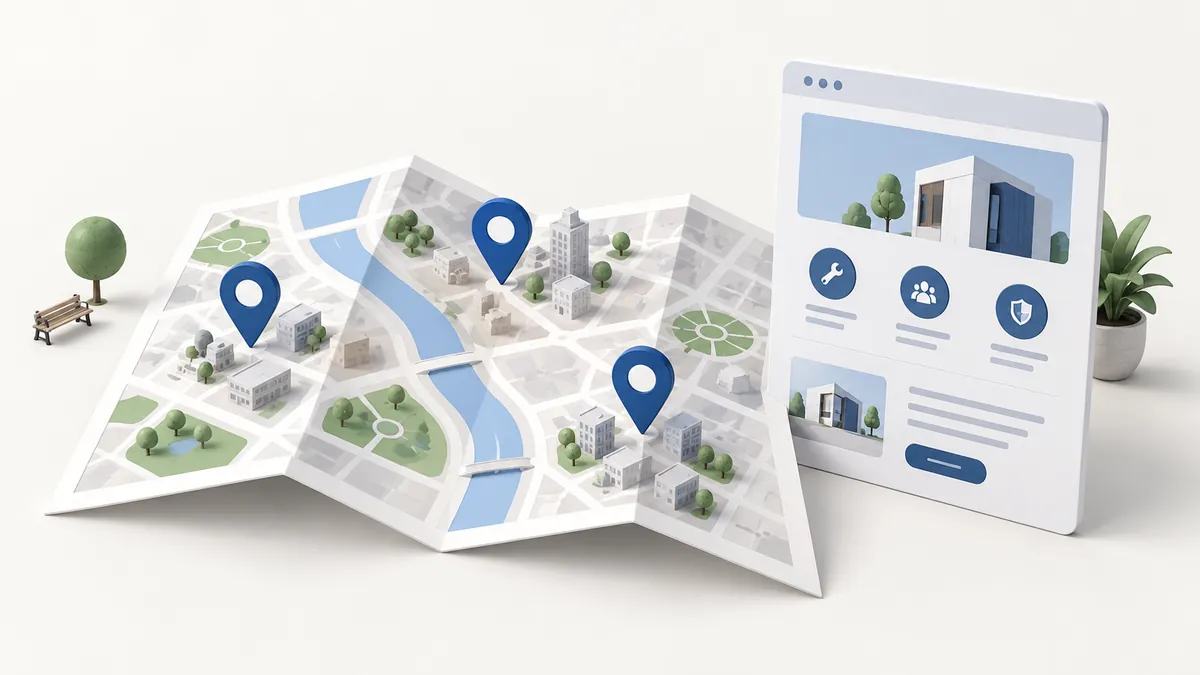
Your business serves several nearby cities. Does that mean your website needs a separate page for every one of them?
No. Separate city pages are useful when they help customers understand a genuinely different location, service arrangement, or local situation. If the only difference is the city name in the heading, one strong service-area page may be the better starting point.
The decision isn’t about reaching a magic number of pages. It’s about whether each page gives someone a useful answer they wouldn’t get as clearly elsewhere on your site.
Start with the customer’s question
A person looking for a contractor, accountant, or repair service wants to know whether you can help them where they are. Sometimes a simple coverage statement answers that question. Sometimes they need more detail.
Think about a hypothetical company serving Orlando and nearby communities. If the same team provides the same service under the same arrangements throughout that area, a clear service page and coverage section may be enough. A page for every suburb could make the website bigger without making it more useful.
Now imagine the company has a separate staffed location with different opening hours, a different team, and services that aren’t available elsewhere. A dedicated location page has an obvious purpose: it helps people understand and contact that location.
Service-area pages can also be useful without a physical office in each city. The important thing is to describe the arrangement honestly. Serving a place and being based there are not the same claim.
Use these three questions before creating a page
Before adding another city to the publishing queue, ask:
- Do we actually provide the advertised service in this location?
- What does a customer here need to know that isn’t already clear on our main service page?
- What accurate local information or evidence can we contribute?
The first question is essential. The other two help decide whether a standalone page is worthwhile. If the answers are weak, improve your existing service-area information first.
Useful local differences might include appointment arrangements, delivery coverage, project examples, a local team, or a clearly explained restriction. You don’t need every type of detail. You do need a reason for the page to exist beyond inserting another place name.
Our broader guide to creating a local SEO content strategy can help you connect these decisions to the questions your customers actually ask.
Understand the difference between a helpful page and a doorway page
Google’s spam policies on doorway abuse describe pages created to rank for similar searches while directing users through less useful intermediate destinations. They include examples involving multiple regional or city pages that funnel visitors to one page.
That doesn’t mean every city page is prohibited, or that sharing a contact form makes a page a doorway. The concern is the purpose and usefulness of the pages as a whole. Can someone get a meaningful answer on the page they reached, or does it exist mainly to catch a variation of a search?
Don’t try to solve that problem with a sentence about local weather, a landmark, or a city history paragraph pasted above generic sales copy. Those details may be unique, but they don’t necessarily help someone choose your service.
Write for the customer standing in that location with a real need. If you can’t explain how the page helps that person, more words won’t create a stronger reason for it to exist.
What should a useful city page include?
Open with the service and the location, then explain the arrangement. Are customers visiting your office, or is your team traveling to them? Does coverage include the whole city or only part of the surrounding area?
Make the next step specific. Someone requesting an on-site estimate may need to provide a ZIP code and project details. Someone visiting a staffed office needs accurate directions, hours, and contact information.
| Useful detail | Why it belongs |
|---|---|
| A real project in the area, shared with permission | Shows relevant work rather than merely claiming local experience. |
| Clear coverage boundaries | Helps someone determine whether you can serve their address. |
| Location-specific appointment arrangements | Sets realistic expectations about how the service works. |
| Accurate office information, where an office exists | Helps customers visit or contact the correct team. |
| Answers to questions customers from that area actually ask | Gives the page a practical purpose beyond repeating a service description. |
Don’t manufacture examples if you haven’t completed a project there. Explain your actual coverage and service process instead. If a local requirement matters, verify it with the relevant authority before including it, and assign someone to keep that information current.
Customer reviews can support a page when they are genuine, relevant, and used appropriately. They shouldn’t be rewritten to imply a different location or experience. Our article on getting local reviews may help you develop that evidence over time.
Don’t invent an office to support a page
A city page does not require you to claim an address there. “We provide on-site service in Winter Park” is different from “Visit our Winter Park office.” Use the statement that matches reality.
Google Business Profile is also a separate system from your website’s page structure. Adding a city page does not automatically make your business eligible for an additional profile. Check Google’s business representation guidelines before creating profiles for additional locations, especially if you operate as a service-area business.
Be consistent about your business name, actual locations, and how customers reach you. A website that implies several staffed offices while the contact information describes one traveling team creates confusion before the first conversation.
Make the pages part of a sensible website structure
Useful pages should be easy to find through normal navigation and relevant links. A service-area overview can explain your coverage and link to the locations that deserve more detail.
Keep service information and location information connected. If someone lands on a city page about roof replacement, they should be able to learn about the replacement process without guessing which menu item contains it.
Avoid filling every footer with an enormous list of city-and-service combinations. Ask whether the links help readers navigate. A clear overview may be more usable than dozens of nearly identical labels.
This is where content planning and responsive website design meet. The structure has to remain understandable on a phone, not just look comprehensive on a desktop sitemap.
What if you already have dozens of similar pages?
Review them before deleting anything. Some may have useful links, search traffic, or inquiries attached to them. Others may contain details that should be preserved even if the overall structure needs simplifying.
Sort the pages into three practical groups: worth keeping and improving, better combined into a broader resource, or no longer relevant to what you offer. Compare the actual content and purpose rather than deciding from word count alone.
If you combine pages, plan what happens to the retired addresses. A relevant replacement may call for a permanent redirect; a page with no genuine replacement should not automatically send people to an unrelated homepage. Google’s redirect guidance explains the technical options.
Make changes in a way you can review. Record which pages were changed and monitor both useful inquiries and search performance. Don’t assume that fewer pages must improve results any more than you assume that more pages must improve them.
Build the next page only when it earns its place
Start with one important location. Gather the real questions, service details, and evidence you have for it. If those support a useful page, create it carefully. If they don’t, make your main coverage information clearer.
Your website should explain where you work without pretending to be something your business isn’t. If you’re unsure which structure fits your coverage, our SEO services can help you assess the existing pages and plan a more useful local presence.

0 Comments